We Are the Targets
WE ARE THE TARGETS
ROUNDUP
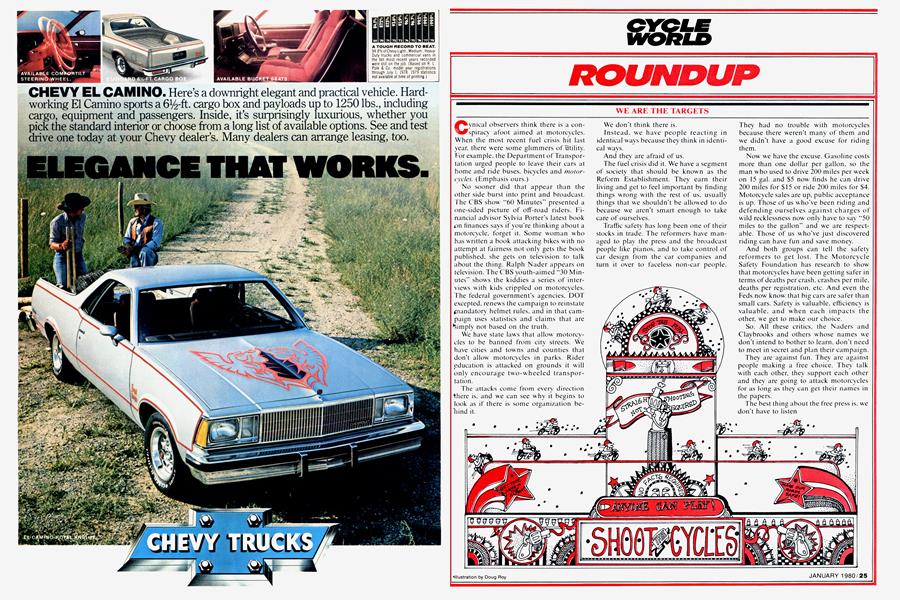
Cynical observers think there is a conspiracy afoot aimed at motorcycles. When the most recent fuel crisis hit last year, there were some glimmers of utility. For example, the Department of Transportation urged people to leave their cars at home and ride buses, bicycles and motorcycles. (Emphasis ours.)
No sooner did that appear than the other side burst into print and broadcast. The CBS show “60 Minutes” presented a one-sided picture of off-road riders. Financial advisor Sylvia Porter’s latest book i>n finances says if you’re thinking about a motorcycle, forget it. Some woman who has written a book attacking bikes with no attempt at fairness not only gets the book published, she gets on television to talk about the thing. Ralph Nader appears on television. The CBS youth-aimed “30 Minutes” shows the kiddies a series of interviews with kids crippled on motorcycles. The federal government’s agencies, DOT excepted, renews the campaign to reinstate jpnandatory helmet rules, and in that campaign uses statistics and claims that are dimply not based on the truth.
We have state laws that allow motorcycles to be banned from city streets. We have cities and towns and counties that don’t allow motorcycles in parks. Rider education is attacked on grounds it will only encourage two-wheeled transportation.
The attacks come from every direction there is, and we can see why it begins to look as if there is some organization behind it.
We don’t think there is.
Instead, we have people reacting in identical ways because they think in identical ways.
And they are afraid of us.
The fuel crisis did it. We have a segment of society that should be known as the Reform Establishment. They earn their living and get to feel important by finding things wrong with the rest of us, usually things that we shouldn’t be allowed to do because we aren’t smart enough to take care of ourselves.
Traffic safety has long been one of their stocks in trade. The reformers have managed to play the press and the broadcast people like pianos, and to take control of car design from the car companies and turn it over to faceless non-car people.
They had no trouble with motorcycles because there weren’t many of them and we didn’t have a good excuse for riding them.
Now we have the excuse. Gasoline costs more than one dollar per gallon, so the man who used to drive 200 miles per week on 15 gal. and $5 now finds he can drive 200 miles for $15 or ride 200 miles for $4. Motorcycle sales are up, public acceptance is up. Those of us who’ve been riding and defending ourselves against charges of wild recklessness now only have to say “50 miles to the gallon” and we are respectable. Those of us who've just discovered riding can have fun and save money.
And both groups can tell the safety reformers to get lost. The Motorcycle Safety Foundation has research to show that motorcycles have been getting safer in terms of deaths per crash, crashes per mile, deaths per registration, etc. And even the Feds now know that big cars are safer than small cars. Safety is valuable, efficiency is valuable, and when each impacts the other, we get to make our choice.
So. All these critics, the Naders and Claybrooks and others whose names we don’t intend to bother to learn, don't need to meet in secret and plan their campaign.
They are against fun. They are against people making a free choice. They talk with each other, they support each other and they are going to attack motorcycles for as long as they can get their names in the papers.
The best thing about the free press is, we don't have to listen